

What to do with my envy of a popular Substacker?
Thinking on the page about the difference between journaling and public-facing writing

Thanks for all the notes on my last post about envy. I’d love to hear from you about whether envy has been generative for you—one friend shared that feeling envy led her to quit her job! Today, I’m sharing another meditation on the topic…

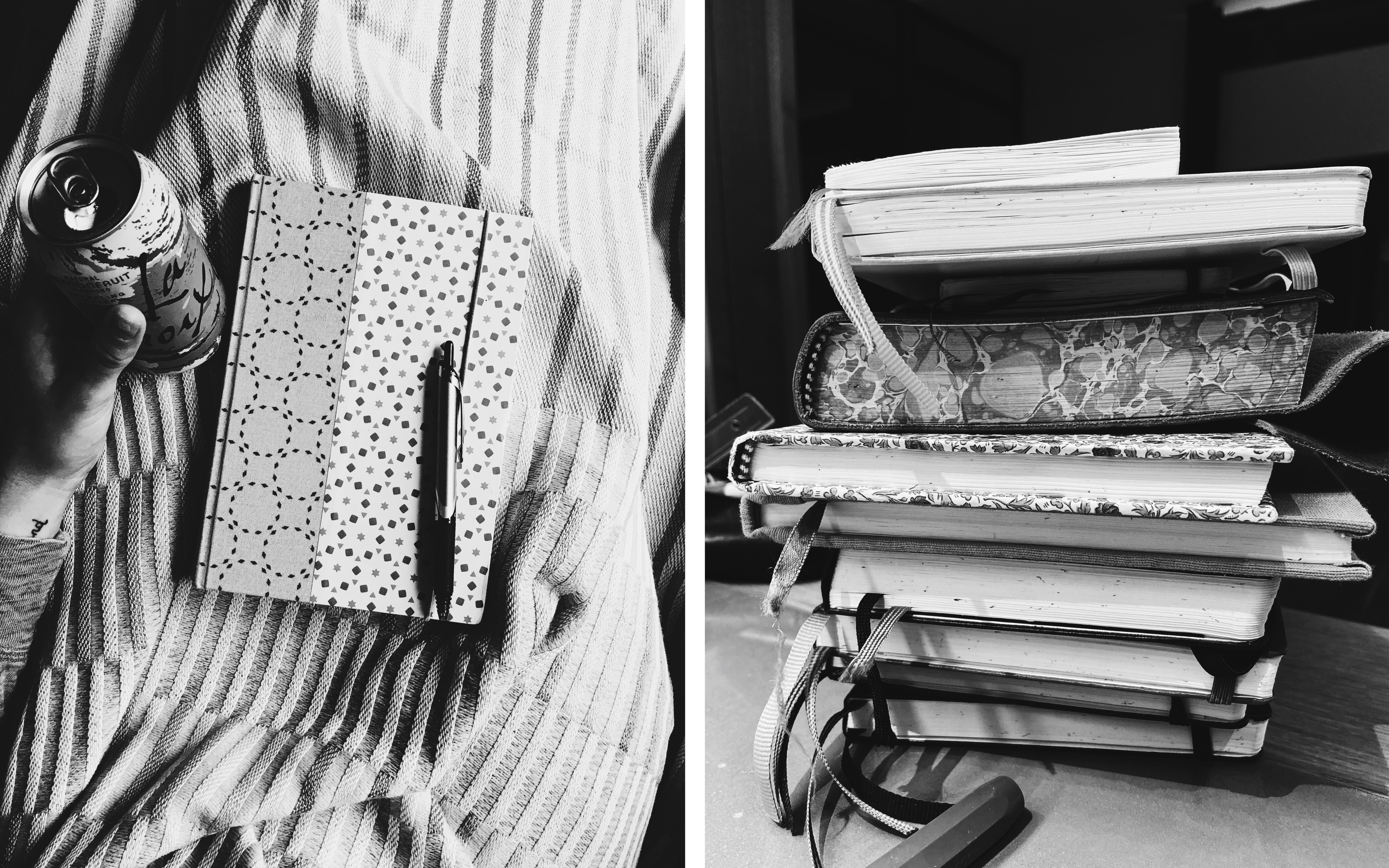
Recently, a popular Substacker equated her newsletter to her private diary.1 I balked at her admission, even though this wasn’t news—she’d stated something similar before. My initial feeling was that she was committing some sort of faux pas. Yet, ranking as one of the top Culture publications, it’s obvious that her tens of thousands of subscribers like (and probably expect) her level of disclosure.
A few months before, I’d briefly paid for a subscription to understand how she used paywalls around personal gossip such as that of her divorce. Paywalling divorce and other intensely personal content seems to be a lucrative paid conversion tactic generally—Jo Goddard does it over at Big Salad, as has Virginia Sole-Smith on Burnt Toast (I cannot recommend her writing about diet culture enough). This doesn’t come as a surprise to me, since getting to read the juicy details of someone’s divorce is not unlike getting a peek into their diary. And in a parasocial relationship, expecting admission to the private corners of a creator’s life is standard. However, it seems to me that encouraging the notion that the writing getting published is akin to unedited, unprocessed word vomit (technical term) is not just naive, but dangerously dismissive.
In The Art of Memoir, Mary Karr says it is wise to have processed an event before turning it into public-facing writing. In other words: write while you go through it, perhaps in a journal, but don’t consider that finished material. Karr provides a seven- or eight-year rule of thumb lest your ego still reign supreme, which I find unnecessarily dogmatic. There is space for great writing that processes live on the page. Equally, there are events still unprocessed after a decade that result in uncomfortably raw prose. I’d argue, instead, that after thinking on the page, assessing and rewriting with a clear idea of what it is one wants to say determines the merit of publishing personal material.
Karr’s axiom does not hold true in the blogosphere-cum-Substack, where an ongoing mining of the self for “content” has been standard practice for a quarter of a century. True, memoirs, personal essays, and autobiographical novels are not new fare, but historically, they reached an audience through an editorial chain, beginning with a pitch to gain entry to the medium. Now, for better (and some say worse), anyone can publish their thoughts about their lives and find an audience.
In equating her (ostensibly private) diary with her (public, popular) Substack—one I assume she spends a decent chunk of time on given the average length of posts, the amount of photos and graphics, and her publishing cadence—the writer in question encourages readers to think of her writing as raw and unvarnished. This is clearly a useful tactic—we assume a level of access to her “private” life, when only gaining access to a facsimile of it. As I said already, my initial reaction was judgment and derision. It brought up questions for me about self-disclosure and disdain generated from a sort of prim Victorian appropriateness. What, I wondered, does someone writing publicly about their life (myself included) owe their readers? Is it a dial that can be turned up and down at will or does one break the contract of disclosure in order to maintain privacy? What does one calling one’s writing a “diary” grant and what does it prevent?
These aren’t necessarily new questions for me but were timely as I have both been questioning what to write about on Othertongue and investigating the utility of my own journaling process. Before the Palisades fire—when the dozens of journals I’d written from my mid-twenties to mid-thirties burned—I’d already started to feel a separation from the project of journaling, which I’d often thought of as my life’s work. Even though I wanted to achieve other, grander, less-private goals, this was the longest term project I’d committed to, one that began when I was eight and comprised thousands of pages and contained a record of my interior life. The experience of that separation happened in tandem with my doing what I think of as growing up—learning to let go of past wounds, doing deep work in therapy, and starting to feel less insecure as a person. I no longer needed the mirror of the page, no longer believed in the pen as divining rod. (This isn’t to say that all journalers or diarists are looking for such outcomes, but that this was my process.) Much of the final entries questioned why I was turning to the page at all.
After the fire, I found myself more bereft about the loss of my jewelry. Before, I couldn’t have said that I would want the jewelry back more than the journals. It wasn’t about the cost of the pieces, but about their meaning accrued in both acquisition and wearing. Though I’d endeavored on a near-daily basis for over ten years to plot the meaning of my life on the page, it turned out the quotidian jewelry signified more. Of course, this is a false equivalency, drawn only because of the magnitude of loss, in which I am forced to reckon with the impossible question of which I’d retrieve if I could go back.
Over the past few months, I’ve tried writing again in a journal, but have found myself unable to comply with a task that had been a lifeline for so many years. Instead, I questioned the purpose, realizing that I could no longer think of it as a place for processing my interior life, but instead as a notebook that would become essays. I no longer feel the need to write in a journal in order to confirm my existence, I wrote. And I would have called it a need before. Now, I approach the concept of journaling like some once-vital vestigial appendage.
In another journal entry about my own relationship to journaling (I am nothing if not a lover of meta-analysis), I responded to the Substacker’s perhaps throwaway comment about her newsletter being her diary. She was a paragon of self-exposure to the point of oversharing. Worse, she was giving writers of the self a bad name. I felt she was committing a common error in seeing a private practice as mere fodder for public-facing endeavors that could gain money, likes, clout, etc.
It took some time (and a lot of writing of what became this essay) to come to an obvious realization: I envy her. Of course I do! Here she is, putting herself fully out there without much existential hand-wringing and it has brought her success. Agh! I spent so much time prevaricating about the point of journaling what the hell I should write about in this newsletter and how I could reconcile all of this with my need to titrate personal disclosure that I didn’t realize what was staring me in the face. I wish I still had the record of a pivotal decade of my life and I am envious of her ability to just put it out there. “It,” in my case, is both the messy way I think and sometimes write, as well as my confusion about what to share publicly. At the moment, I am going through so many private, gripping experiences that I have not processed. I want to write about these things, but I worry about appropriateness either because my thoughts are nascent, ruminative (hello right now), or involve other people like my husband. This includes the up-in-the-middle-of-the-night kind of thoughts that even I know I should let dissipate with the sunrise and unmetabolized feelings about Big. Life. Changes.
I envy the openness of writers who chronicle their lives so openly, who consider updates on their emotional vicissitudes relevant. It’s this line of thinking that has sometimes led me to considering an anonymous newsletter, one in which I could be wholly myself, a place to both unleash the screed and to document the strange confluence of life events my husband and I are living through without fear that I’ve said too much.
Recognizing envy allows me to do something with it. In this case: Write as openly as I feel I am capable of doing. Be honest. Do a better, freer job of allowing my unruly thinking to unfurl on the (digital) page and to resist corralling my thoughts into the expected format of a personal essay.
One of the funny things about writing is that I often don’t know what I feel until I’ve written. For me, this alchemical quality of thinking on the page is one of the most compelling reasons to write. When I say compelling, I mean it literally, as in, I am often compelled by a force outside myself to figure out what it is I think/mean/want to say by placing words in a sequence. Sure, it may contain tendrils of a future essay, but I think the envy is telling me to do what feels right to me. To write for myself and to write to you. To allow my process onto the page, Mary Karr be-damned.

I’m not going to link to her because this isn’t about attacking her but rather investigating what it brings up in me.
Excellent exploration of a complicated question. As for my journals, which I only kept sporadically beginning in high school through college, I waited for the garbage truck to come one day and then threw them directly into its maw!